
Why Your Office Still Isn’t Working Post-Hybrid and Why More Office Design Ideas Won’t Fix It
A post-hybrid office does not need every new office design idea or trend. It needs a clearer brief, based on how people actually use the space, where the friction is and what the business needs the office to achieve now.
A lot of businesses have changed how they work since hybrid became part of everyday office life.
Fewer people are in five days a week. Meetings happen across rooms, screens and locations. Some people need focused time away from home, while others come in for collaboration, training, client meetings or simply to reconnect with the team.
On paper, the office has adapted … but, in practice, many spaces still don’t quite work.
The office layout might look fine at first glance, with relatively new furniture, meeting rooms, breakout areas and flexible desks. Yet people still struggle to find the right place to work. Meeting rooms are under pressure, noise keeps coming up as a complaint and some areas sit empty while others feel overused. That doesn’t always mean you need a full redesign, it does mean the space needs a proper review.
Good office design ideas are useful but only when they answer the right problem.
The office has changed but the brief may not have
In our recent blog on how the workplace has changed over the last 20 years, we looked at the shift from fixed desks, predictable routines and presence-based office planning to more flexible, purpose-led workplaces. That shift has not stopped. If anything, hybrid working has pushed it further.
The old office brief was usually fairly straightforward: enough desks, a few meeting rooms, support spaces and somewhere for people to take a break. Most people were expected to be in the office most of the time, so the layout followed that assumption.
Now, people use the office differently depending on the day, the team and the task. The same space may need to support focus work in the morning, a project meeting at lunchtime, client calls in the afternoon and a team catch-up later in the day. If the workplace is still based on the old brief, it will start to feel out of step with how people actually use it.
Why this is not just about getting people back in
It is tempting to see the post-hybrid office problem as a people issue.
Why aren’t staff coming in more?
Why does the office feel quiet on some days and overcrowded on others?
Why does everyone seem to want a meeting room at the same time?
Those are valid questions but they do not tell the whole story.
For senior teams, the concern is often commercial. The office is still a major investment so it needs to work hard. When space is underused, poorly used or creating frustration, it becomes a question of cost, productivity, return on investment and workspace efficiency.
For facilities, office and operations teams, the same issue shows up in a more practical way. They are often the ones dealing with staff complaints, room booking issues, awkward layouts, acoustic problems, furniture frustrations, storage issues and pressure from leadership to “sort the office”.
The risk is making knee-jerk changes. Adding more desks may not solve the problem, removing desks may make it worse and a new breakout area may look good but still sit empty. More meeting rooms may help … or they may simply cover up a bigger issue with how people are using the space. Before looking for more office layout ideas, it is worth asking a more basic question:
What is the office actually being asked to do now?
Getting people back in is only part of the question. The space still has to support how they work when they are there.
The signs your office layout is not working
A workplace that no longer fits the business does not always look obviously broken.
Sometimes it looks good in photographs but feels difficult to use day to day.
Common signs include:
- desks sitting empty on quieter days, then being hard to find on peak days
- meeting rooms being used for solo video calls
- people coming into the office, then spending most of the day on Teams
- open-plan areas being too noisy for focused work
- collaboration spaces that exist but are not used naturally
- breakout areas that look good but do not add much value
- staff raising issues about privacy, noise, comfort or where they are meant to sit
- leaders questioning whether the office is supporting productivity, culture and workspace efficiency
Over time, these ‘small’ irritations start to affect how people feel about the office and it loses its purpose. At this point, office design needs to move beyond desk numbers and look properly at how people behave in a hybrid workplace.
Office design ideas only work when they answer the right problem
There are plenty of office design ideas that can help a post-hybrid workplace work better.
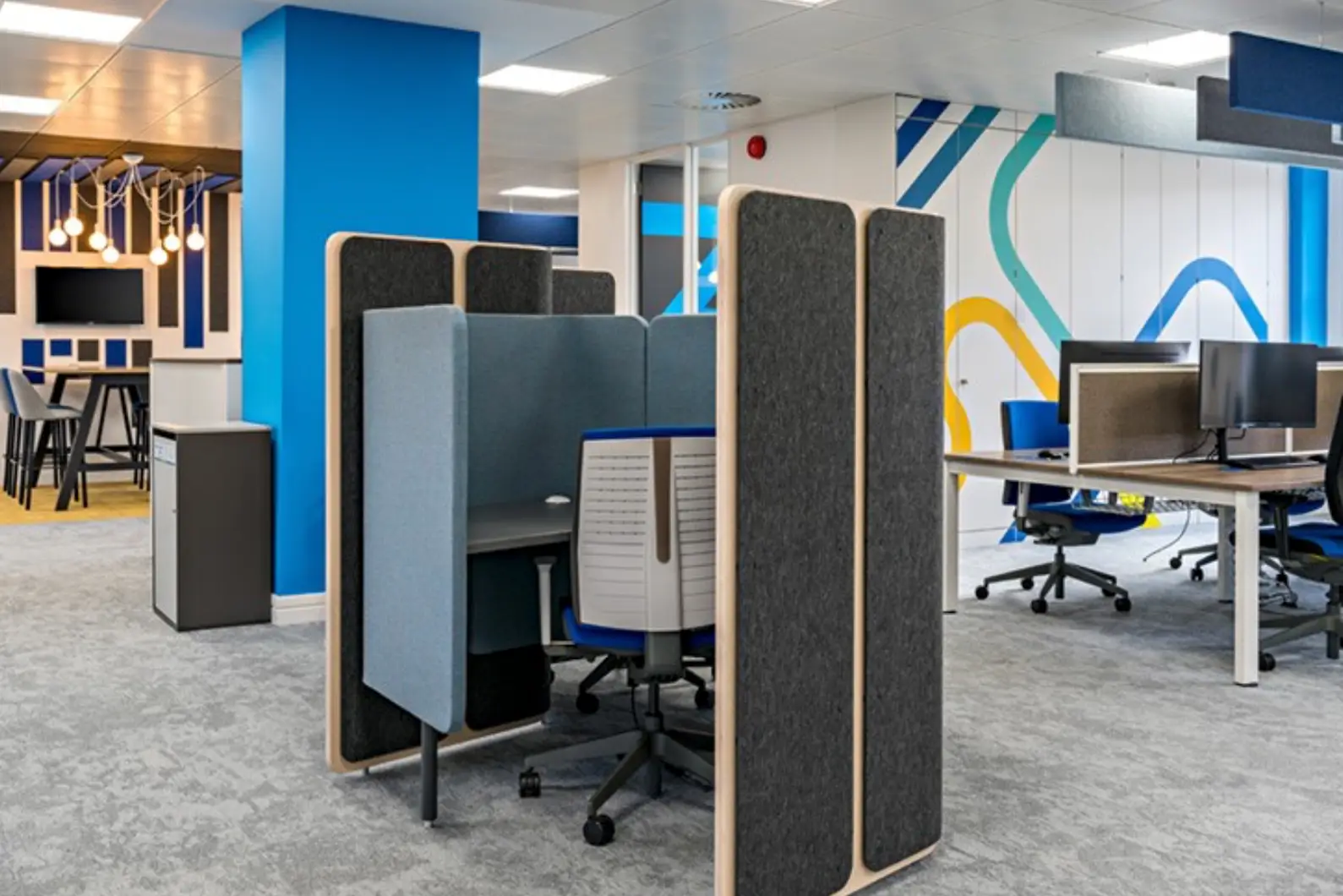
- Office pods can support private calls.
- Smaller meeting rooms can suit hybrid meetings.
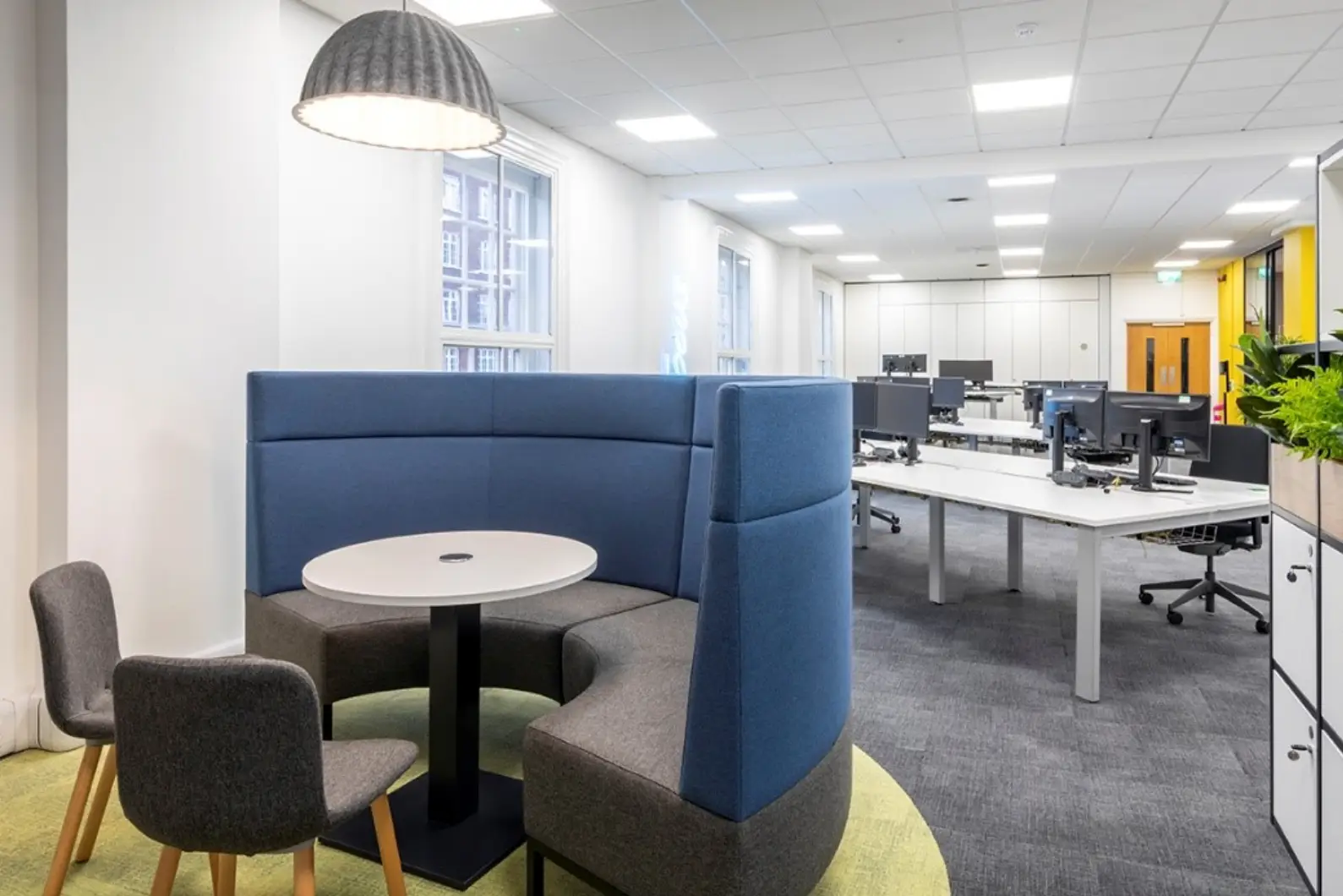
- Better breakout areas can encourage informal conversations.
- Quieter zones can help with focus.
- Flexible furniture can make the space easier to adapt.
- Good office acoustics can make a huge difference to the working day.
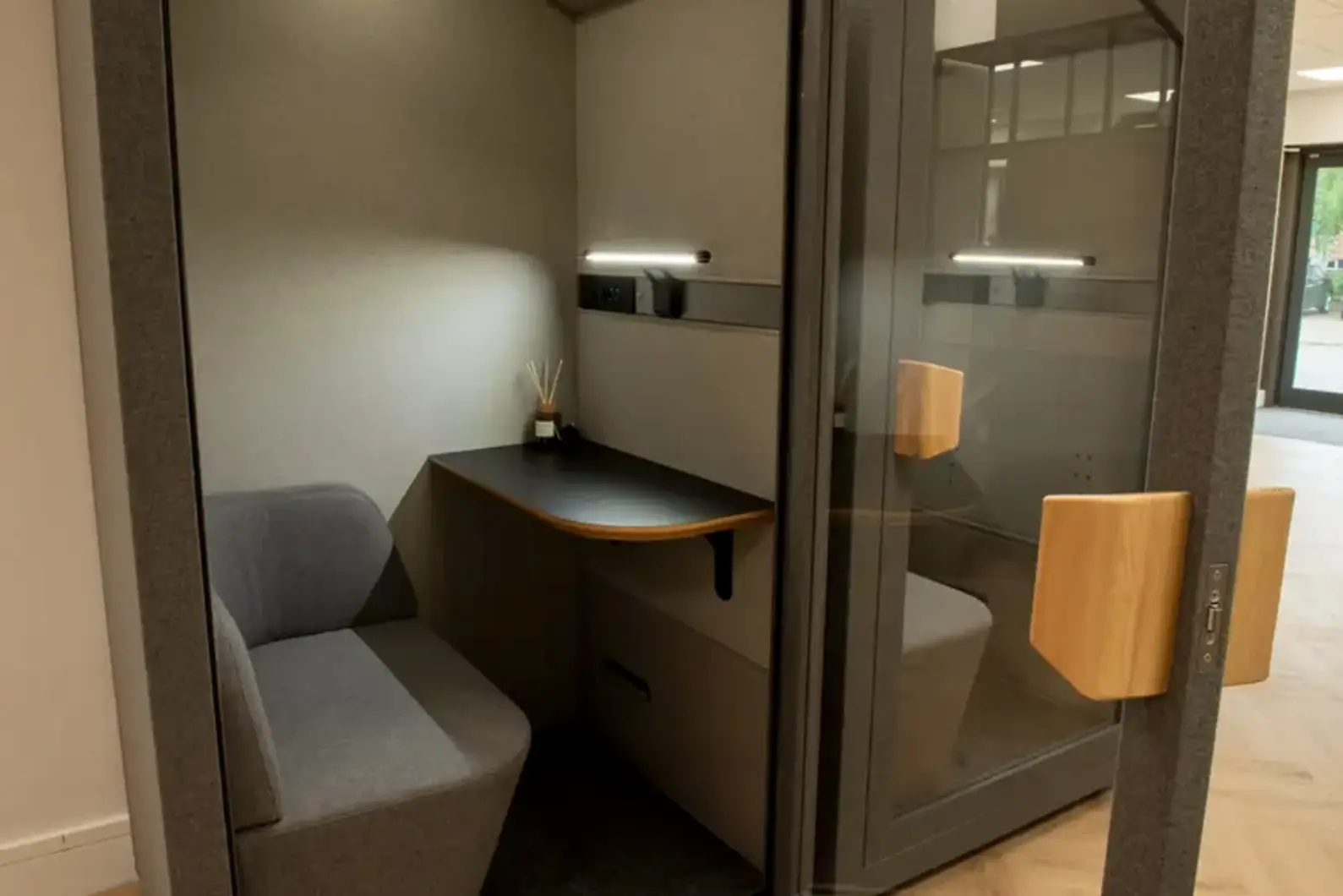
Office pods can support private calls.
All of those things can be useful. They just need to follow the problem, not lead the brief.
People cannot focus? The answer may be acoustic treatment, quiet zones or a different balance between open and enclosed space.
Meeting rooms always booked? Try smaller rooms, better technology, clearer booking rules or spaces for one-to-one calls.
Breakout areas not being used? The issue may be location, furniture, privacy, culture or simply that people do not understand what the space is for.
Desks underused? The problem may not be the number of desks. It may be attendance patterns, storage, booking systems, team behaviours or the way the office is zoned.
This is where office design trends can mislead businesses. A trend might be perfectly valid but that does not mean it is right for your office, team or budget.
What to review before changing the space
Before committing to new furniture, a new office layout or a wider refurbishment, it is worth reviewing how the workplace is being used in practice.
Start with the working patterns. When is the office busiest? Which days feel quiet? Are different teams using the space in different ways? Are people coming in for collaboration, focused work, client meetings, training or a mixture of everything?
Then look at the spaces themselves. Which areas are always full? Which are avoided? Where do complaints happen? Are meeting rooms the right size? Is there enough privacy for video calls? Are people using breakout spaces because they want to, or because there is nowhere better to go?
It is also worth separating symptoms from causes.
A meeting room problem might actually be a technology issue. A desk problem might be a storage issue. A collaboration problem might be a noise issue. Low attendance might mean the office is not giving people enough reason to come in.
That matters because every change carries cost, disruption and some level of risk. The clearer the brief, the easier it is to make decisions that are practical, proportionate and worth the investment.
This is where an office space strategy or workplace audit can be useful. Not as a box-ticking exercise but as a way to understand what is really happening before money is spent.
Making the right changes
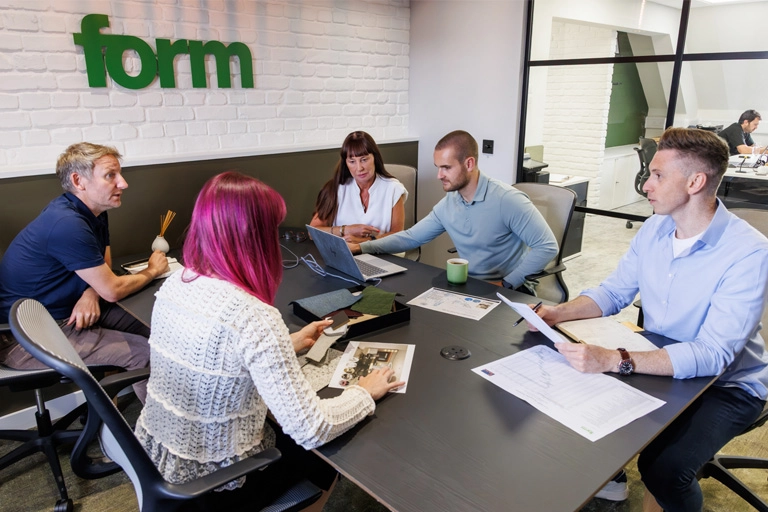
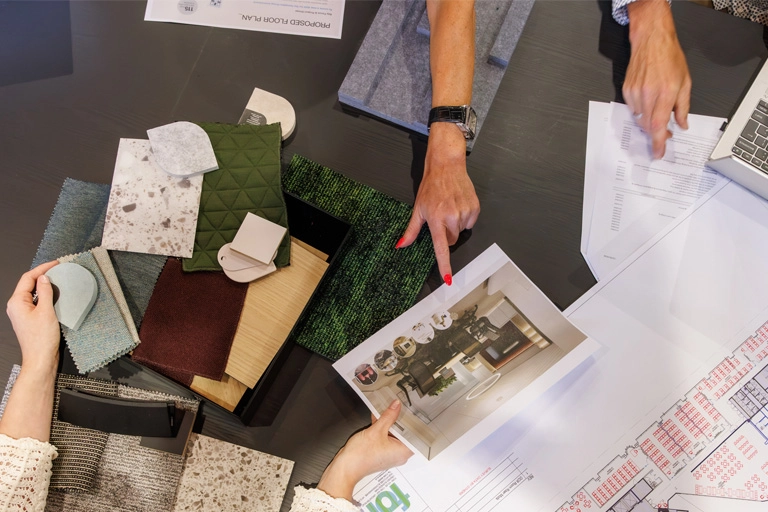
Once you understand what is really happening, the next step becomes much clearer. Some offices only need targeted improvements, such as better acoustic control, clearer storage, more suitable meeting spaces or a layout that supports hybrid working more naturally.
Others may need a bigger rethink.
The important part is not the scale of the change. It is knowing what needs to change, why it matters and how it can be delivered without creating unnecessary cost or disruption.
A better office starts with a clearer brief
Hybrid working has not made the office redundant. It has made the office more accountable.
If people are travelling in, the space needs to support what they came in to do. If the business is paying for it, the office needs to make commercial sense. If facilities and operations teams are expected to manage it, the workplace needs to work day-to-day, not just look good on a plan.
That is why the answer is not simply more office design ideas, new furniture or the latest trend. It starts with a clearer brief.
Rather than chasing every new idea, a good workplace supports the people using it, the teams managing it and the business investing in it. That is where good design starts.
If you are reviewing your current office, planning a future move or thinking about how your workplace needs to change, we’d love to talk through your next project, get in touch!