
Workplace Performance: How to Take the Stress Out of an Office Transformation
A less stressful office transformation starts with a clear understanding of what better workplace performance looks like.
This article explains how early decisions, realistic planning and clear accountability help create a workplace that supports people and the business.
An office transformation can put a lot of pressure on the people responsible for it.
The business still needs to operate and budgets need to stand up to scrutiny. Decisions must be made by people who may not agree on what the finished workplace should achieve and that pressure often builds before any work starts.
Much of it comes from uncertainty. A late piece of information can change the brief and reopen decisions everyone thought were settled. Costs can then come back under scrutiny, while facilities or operations teams are left explaining changes they were never properly briefed on.
A less stressful project starts with a clear answer to one question:
What does the workplace need to do better?
This is a great starting point for stronger workplace performance. This simple question moves the conversation away from features and finishes and towards what the business needs from the space.
Workplace performance starts with the business
A workplace is not just a property cost. It affects how the organisation operates every day. It can make communication easier or slower, support good decisions or in contrast, create extra steps that people gradually learn to work around. It can give customers and visitors confidence in the business or may send a message that no longer matches the organisation they are dealing with.
The workplace also has an impact on management time. Recurring complaints and unresolved building issues can absorb far more time than they appear to. When the space no longer reflects how the company works, teams start compensating for it day after day and the cumulative effect is a drag on operational efficiency.
That is why an office refurbishment or wider transformation needs a clear business purpose. A good workplace investment should improve how the business performs, not just the property it occupies.
The aim might be to use existing space better, improve the employee experience or give customers and visitors a more accurate impression of the organisation. Not every benefit will show up neatly in a return-on-investment calculation. Savings from unused space may be easy to quantify, while better communication between teams often becomes apparent over time.
Before the brief develops too far, consider:
- What problem are we trying to solve?
- What would a better outcome look like in practice?
- Will this decision still make sense as the business changes?
These questions keep the project focused on business need when budgets come under pressure.
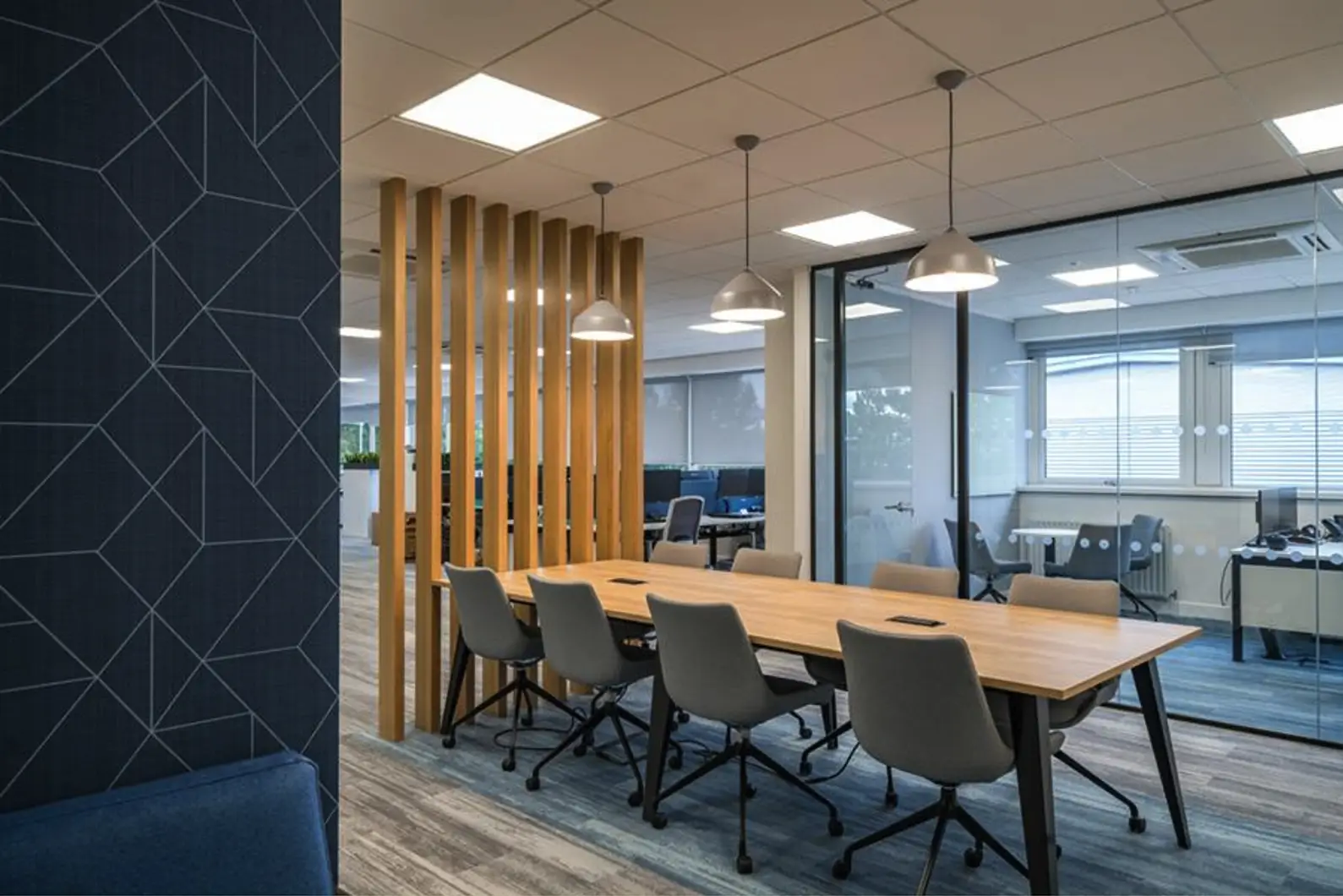
Myers Clark: A smaller footprint designed to deliver greater flexibility, productivity and value
Talent attraction and retention need more than a passing mention
The workplace forms part of the employee experience from the moment someone first visits. Candidates compare the space with the company described during recruitment, while new starters use it to understand how the business operates.
For existing employees, repeated frustrations quickly become part of the everyday experience. It would be unrealistic to claim that office design can fix a weak culture or solve a retention problem on its own. It can, however, support the promises a business makes to its people.
An organisation may talk about collaboration, quality or employee wellbeing. The workplace should help those values appear in practice. When the environment says something different, the gap becomes noticeable.
This is why employee attraction and retention should be part of the brief from the start. The workplace should give candidates a credible impression of the business and improve the everyday experience for those already there.
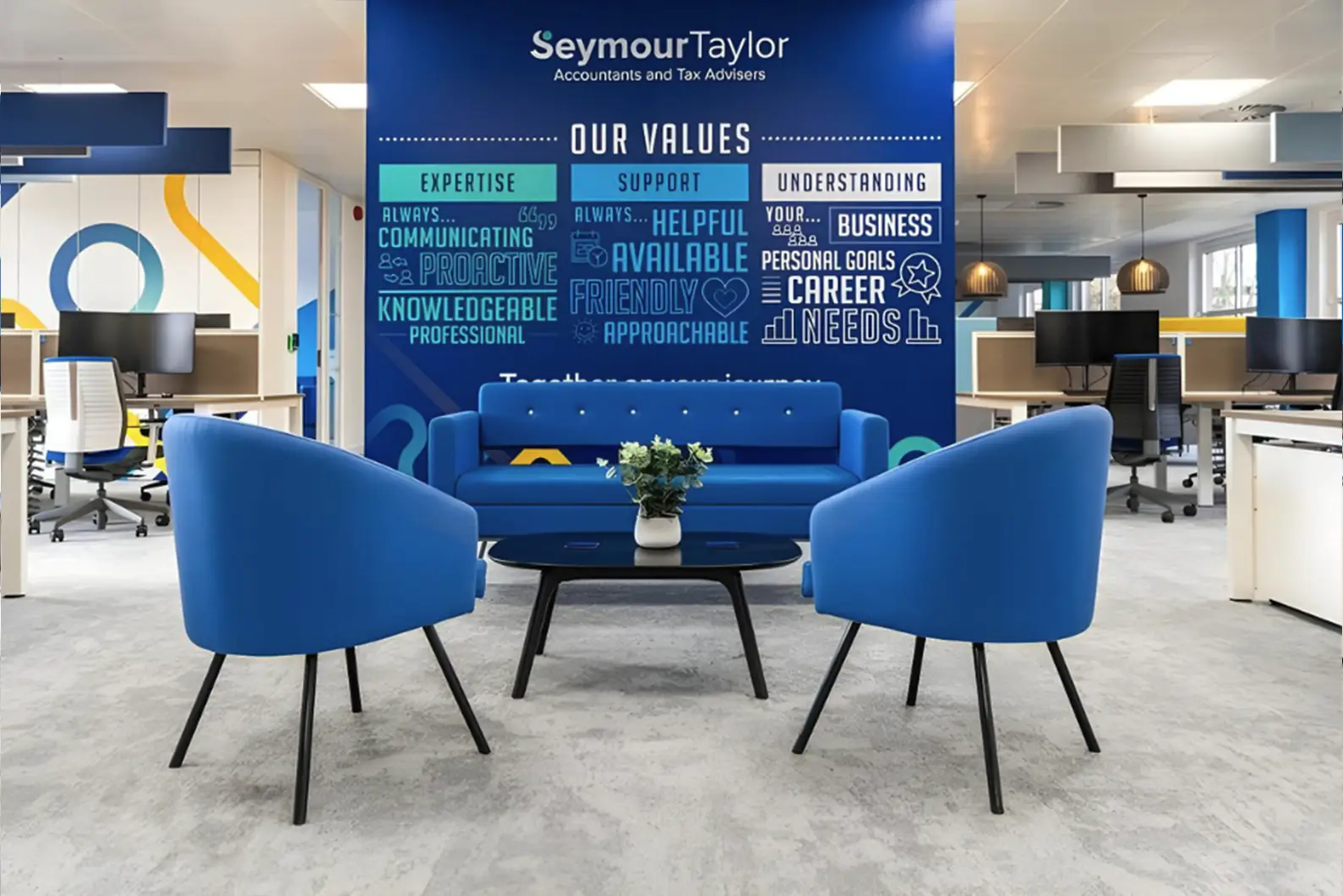
Seymour Taylor: Bringing company values into the workplace rather than leaving them on the page.
Be specific about office productivity
‘Improve productivity’ often appears in workplace briefs but it can mean very different things.
For one business, better office productivity may mean fewer delays between teams. Another may need managers to make decisions more quickly, while a growing organisation may need people to share knowledge without relying on the same individuals every time.
Unless the business defines the problem, productivity remains too vague to guide the project.
It is worth asking where work currently slows down:
- Do teams struggle to find the right people at the right time?
- Are decisions delayed because information sits in separate parts of the business?
- Does the workplace make it harder for new employees to learn from experienced colleagues?
The answers help shape the workplace around real needs and give the business something meaningful to review once the project is complete.
Workplace culture should be visible in how the space works
Workplace culture shows up in how people interact, whether leaders are accessible, teams share knowledge and employees feel part of the wider organisation. A workplace can support those things but only if the business is clear about the culture it wants to strengthen.
One business may need closer working between departments, while another needs to protect focused work. A client-facing organisation may also want the space to communicate confidence without feeling overdone.
The useful question is not, “What should we add to the office?”
It is:
What should the workplace make easier?
That keeps the design grounded in the business.
A clear workplace strategy reduces pressure
A practical workplace strategy gives the project direction.
It should establish what needs to change, who has the authority to make decisions and where the business cannot afford disruption.
Early agreement is particularly important in three areas:
- who owns the final brief and budget
- who needs to be consulted before decisions are made
- how changes will be approved once the project is under way
Without that clarity, the brief can keep shifting. A change requested by one team can expose a concern elsewhere, with knock-on effects for cost and timing. Before long, rework is under way and nobody is entirely clear who owns the decision. Disagreement is not the problem. Stress builds when there is no clear route to a decision.
Cost and programme need honest conversations
Uncertainty around cost can quickly turn an office transformation into a difficult project. An early budget needs to be realistic enough to support decisions. It should reflect what is known about the building and where risks may still exist.
A figure that only works if nothing changes is not especially useful. The programme can also tighten unexpectedly. Key business dates may restrict access, while survey findings can delay design decisions. By the time those points are resolved, longer lead times may have narrowed the available options.
Good office fit-out planning brings those issues into the open early. A sensible contingency gives the team room to respond if something unexpected is found; it is not a sign that the project lacks control. It is better to have an honest discussion about cost and timing at the beginning than to discover later that the design, programme and budget no longer fit together.
Plan around the business to minimise disruption
The business still has customers to serve and employees to support while the project moves forward.
Some work may need to happen in occupied areas and temporary arrangements may be required. A phased programme may be the better route if certain teams or operations cannot be moved at the same time. The goal should be to minimise business disruption, not claim that there will be none.
Employees need clear information. They should know what is changing, when it will affect them and who to speak to if a practical problem arises.
Facilities and operations teams should not be left trying to explain a programme they have not been properly briefed on. Otherwise, they can end up managing contractors, answering internal questions and carrying responsibility for decisions they did not make.
Clear ownership takes that weight off them because someone remains responsible for dealing with issues and returning with a practical answer.
Design for the next stage of the business
A successful project should improve the workplace now without making the organisation start again too soon. That means thinking about realistic business growth and how teams may change over time.
Trying to predict every possible future can add cost without creating much value. The workplace simply needs enough flexibility to accommodate realistic changes in team size, responsibilities and technology without becoming vague or overcomplicated.
This is where purposeful design supports long-term business performance. It solves today’s problems while avoiding decisions that create new restrictions later.
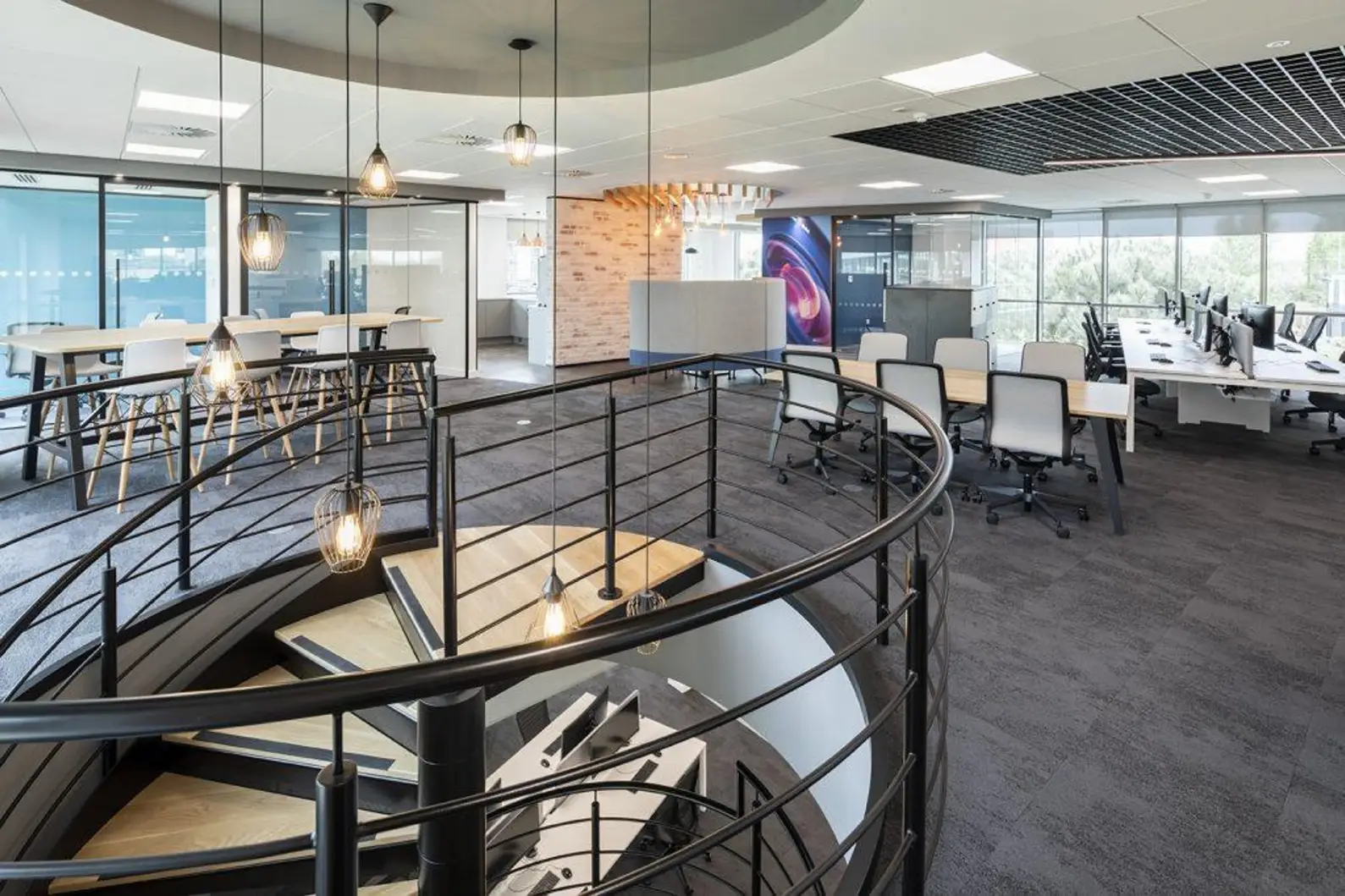
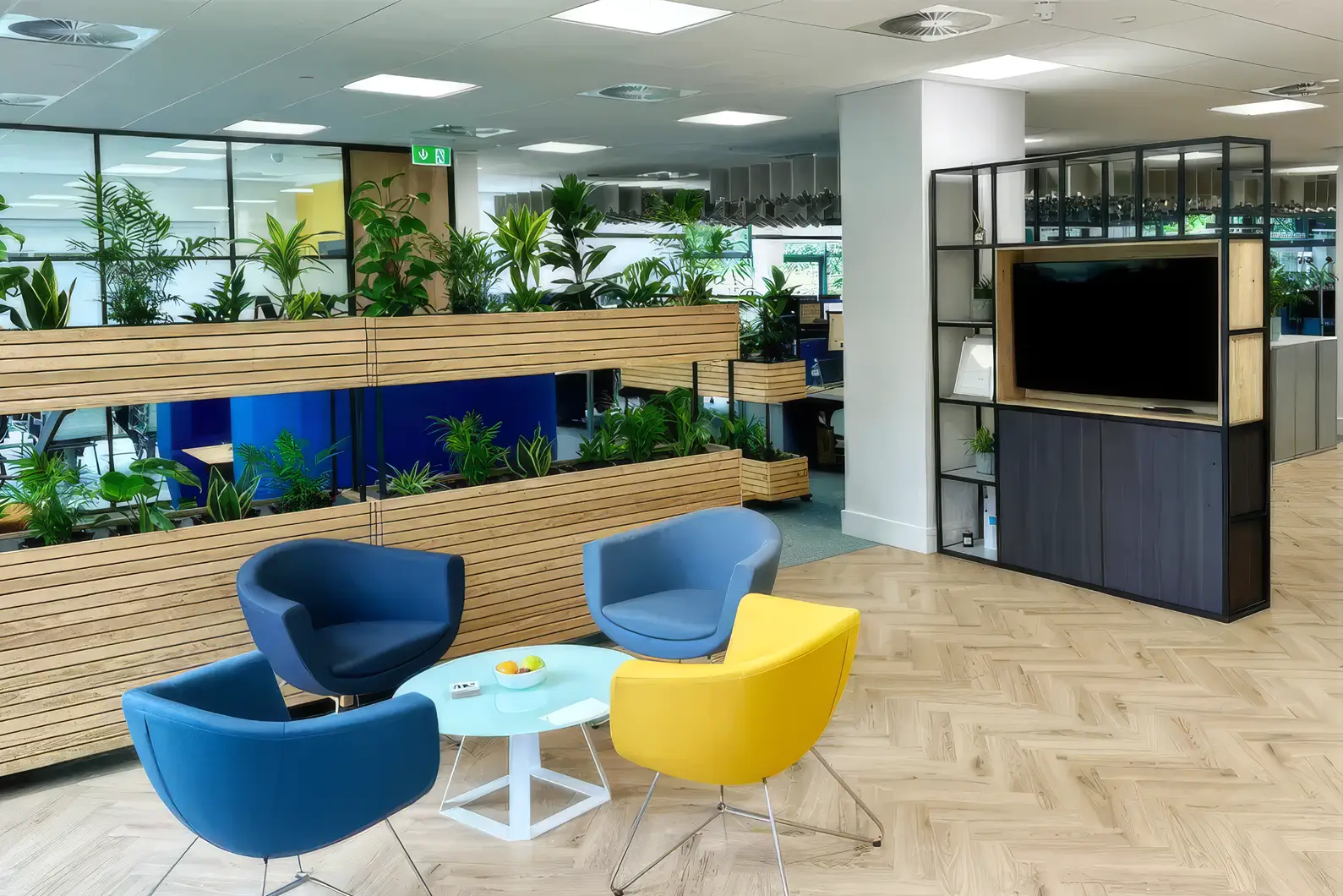
Bühler UK Ltd: A phased, in-occupancy refurbishment designed to support future growth.
Handover is not the end
Practical completion matters but it is not the moment when the workplace proves itself, that happens when people start using the space. The business can then see what is working as planned and where small adjustments may be needed.
Snagging and aftercare are part of the project, not optional extras. Facilities and operations teams should not be left chasing defects once the main work is complete. Nor should they be expected to absorb unresolved problems because the handover date has passed.
Some details only become clear once the space is in use. A door may catch or an area may be used differently from the way it was planned. Small adjustments are part of finishing the job properly, not something the business should be left to sort out.
An office transformation is complete when the space works for the people using it and the business paying for it.
A more controlled office transformation
A less stressful transformation depends on clear decisions, realistic expectations and people who stay accountable when things change. Get that right and the workplace has a much better chance of supporting talent, strengthening culture and improving long-term workplace performance.
If you’re reviewing your workplace this year, we’d be happy to have an informal conversation about what’s working, what isn’t and where the biggest opportunities might be.